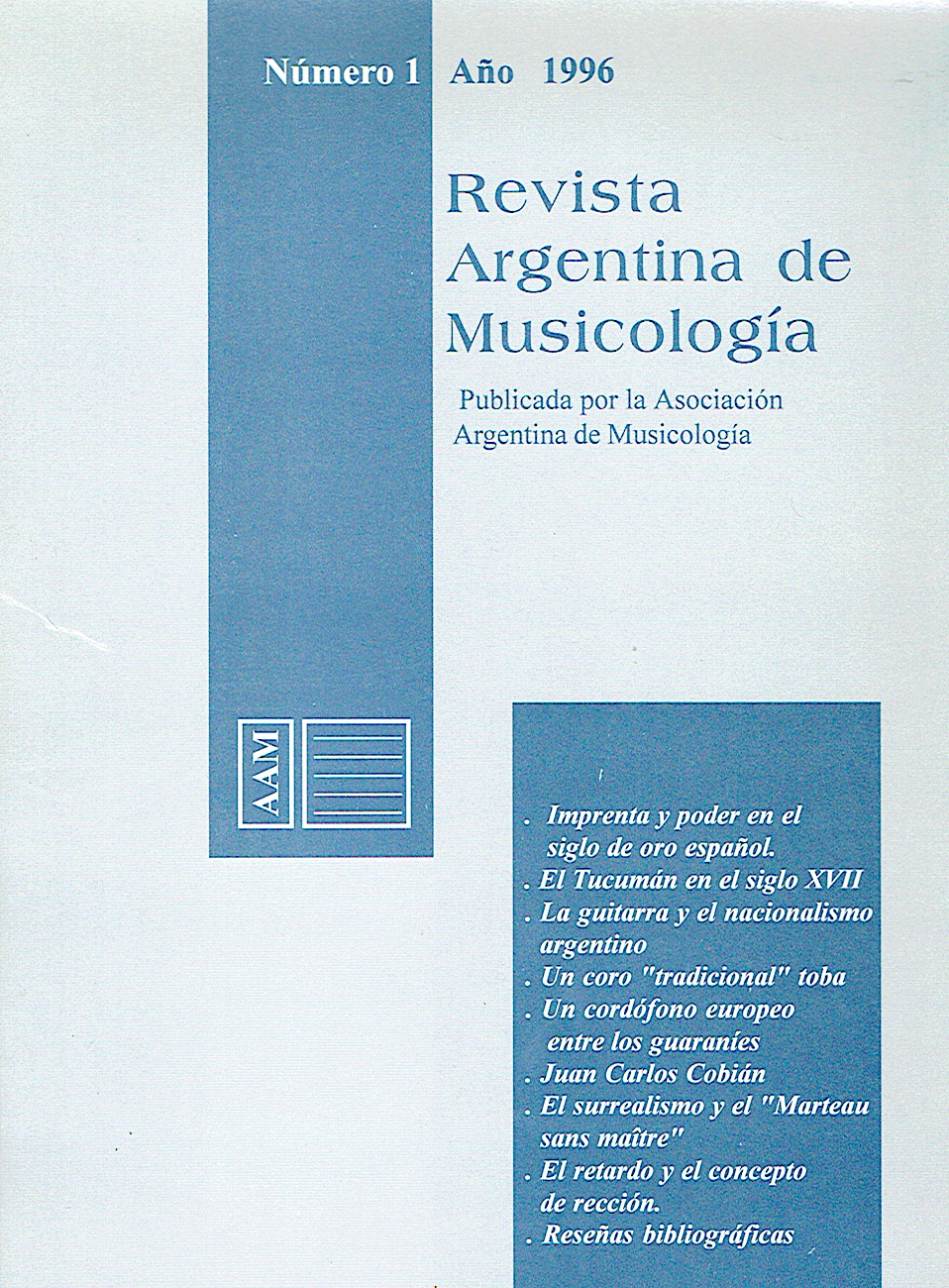
Printing and Musical Power in the Spanish Renaissance.
Abstract
The theme of music and power is highly appropriate for a conference such as this one; firstly, because it transcends the boundaries dividing the historical, cultural, and systematic branches of musicology, allowing each of us—from our own particular vantage point—to subject our ideas to fresh analysis based on more diverse criteria. Secondly, this is a topic that has recently gained prominence within the musicological world. As an outsider, I would like to commend the organizers for their foresight in proposing a subject of such current relevance to international musicology. Despite my reservations regarding the excesses of certain musicologists—predominantly American—who employ "New Musicology" to champion their own social or personal agendas or to advocate for postmodern "polysexualities," those of us working in historical fields have nonetheless deepened our understanding of the contexts in which music flourished, thanks to studies focusing on patronage, musical reception, and other areas that lean toward a sociological perspective.
Downloads
Downloads
Published
Issue
Section
License
Copyright (c) 1996 John Griffiths

This work is licensed under a Creative Commons Attribution-NonCommercial 4.0 International License.
Attribution-NonCommercial 4.0 International
Licencia Creative Commons Atribución-NoComercial 4.0
You are free to:
- Share — copy and redistribute the material in any medium or format.
- Adapt — remix, transform, and build upon the material.
- The licensor cannot revoke these freedoms as long as you comply with the terms of the license
Under the following terms:
- Attribution — You must give appropriate credit, provide a link to the license, and indicate if changes were made. You may do so in any reasonable manner, but not in a way that suggests that you or your use are endorsed by the licensor.
- Noncommercial — You may not use the material for commercial purposes.
- No Additional Restrictions — You may not apply legal terms or technological measures that legally restrict others from making any use permitted by the license.
Notices:
You do not have to comply with the license for elements of the material that are in the public domain or when your use is permitted by an applicable exception or limitation.
No warranties are provided. The license may not grant you all the permissions you need for your intended use. For example, other rights—such as publicity, privacy, or moral rights—may limit how you use the material.