Music in the Construction of Argentine Cultural Identity: The Guitar Topos in the Works of Early Nationalism.
Abstract
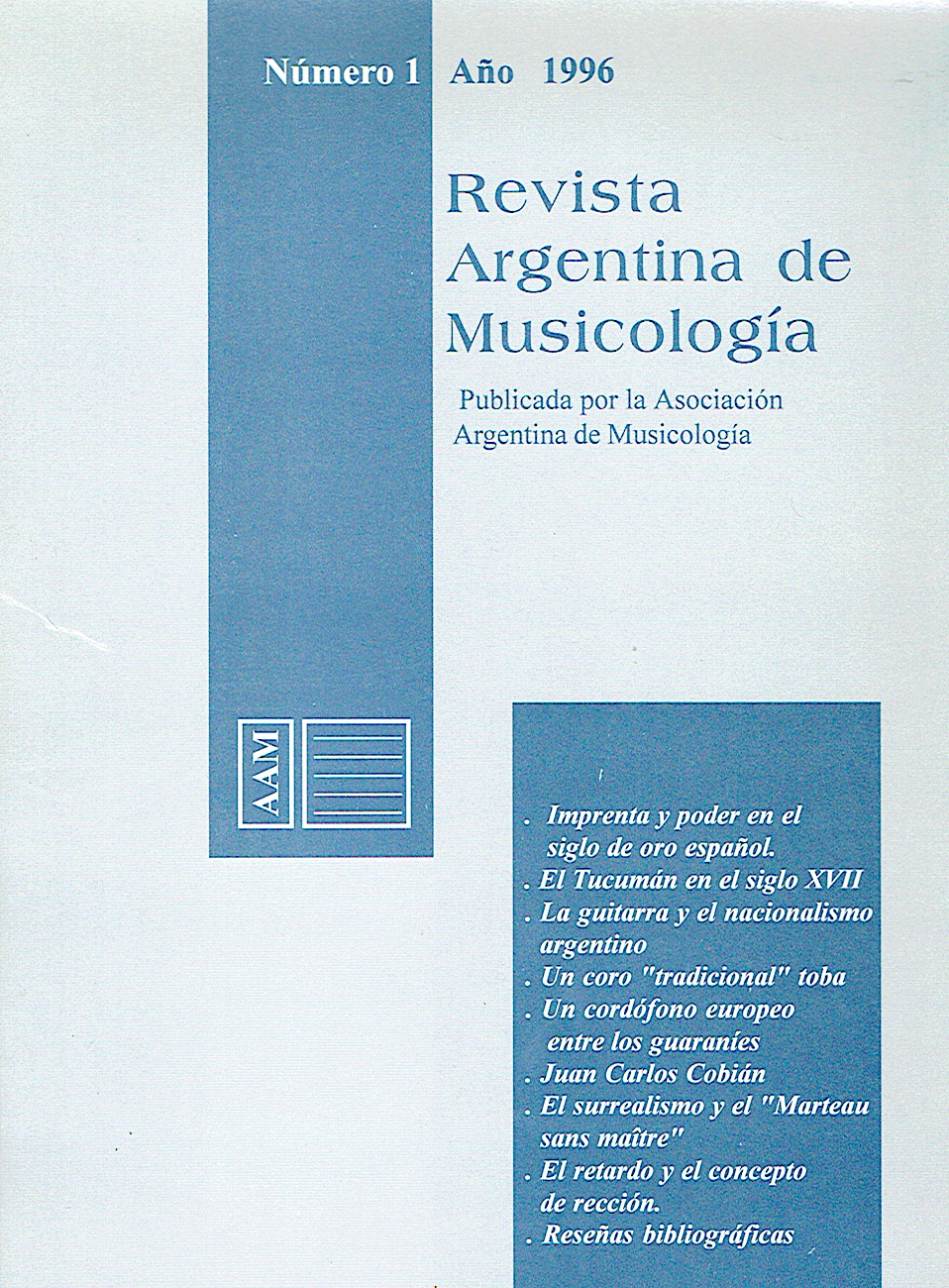
The importance attributed to the guitar as a musical emblem of "Argentine identity" is clearly discernible in both literary and visual arts discourses from the late 19th century onwards. However, within the academic musical discourse of the so-called "Generation of '80," its articulation is more complex, as it is rhetorical rather than explicit. The aim is not to include the guitar as a musical instrument within the repertoire—from which it was virtually excluded—but rather to evoke its image as a musical object and symbol of the rural landscape through a combination of specific melodic, harmonic, textural, and/or rhythmic configurations. In this sense, the musical representation of the guitar constitutes one of the *topoi* of the musical rhetoric found in the first academic musical canon of modern Argentina—commonly known as nationalism. This study aims to examine this *topos* within the output of early nationalism, using the piano works of Alberto Williams and Julián Aguirre as an empirical basis; these composers were selected due to their importance—often regarded as foundational—in the establishment of this movement.
Downloads
Downloads
Published
Issue
Section
License
Copyright (c) 1996 Asociación Argentina de Musicología

This work is licensed under a Creative Commons Attribution-NonCommercial 4.0 International License.
Attribution-NonCommercial 4.0 International
Licencia Creative Commons Atribución-NoComercial 4.0
You are free to:
- Share — copy and redistribute the material in any medium or format.
- Adapt — remix, transform, and build upon the material.
- The licensor cannot revoke these freedoms as long as you comply with the terms of the license
Under the following terms:
- Attribution — You must give appropriate credit, provide a link to the license, and indicate if changes were made. You may do so in any reasonable manner, but not in a way that suggests that you or your use are endorsed by the licensor.
- Noncommercial — You may not use the material for commercial purposes.
- No Additional Restrictions — You may not apply legal terms or technological measures that legally restrict others from making any use permitted by the license.
Notices:
You do not have to comply with the license for elements of the material that are in the public domain or when your use is permitted by an applicable exception or limitation.
No warranties are provided. The license may not grant you all the permissions you need for your intended use. For example, other rights—such as publicity, privacy, or moral rights—may limit how you use the material.