Two studies on Beethoven
Abstract
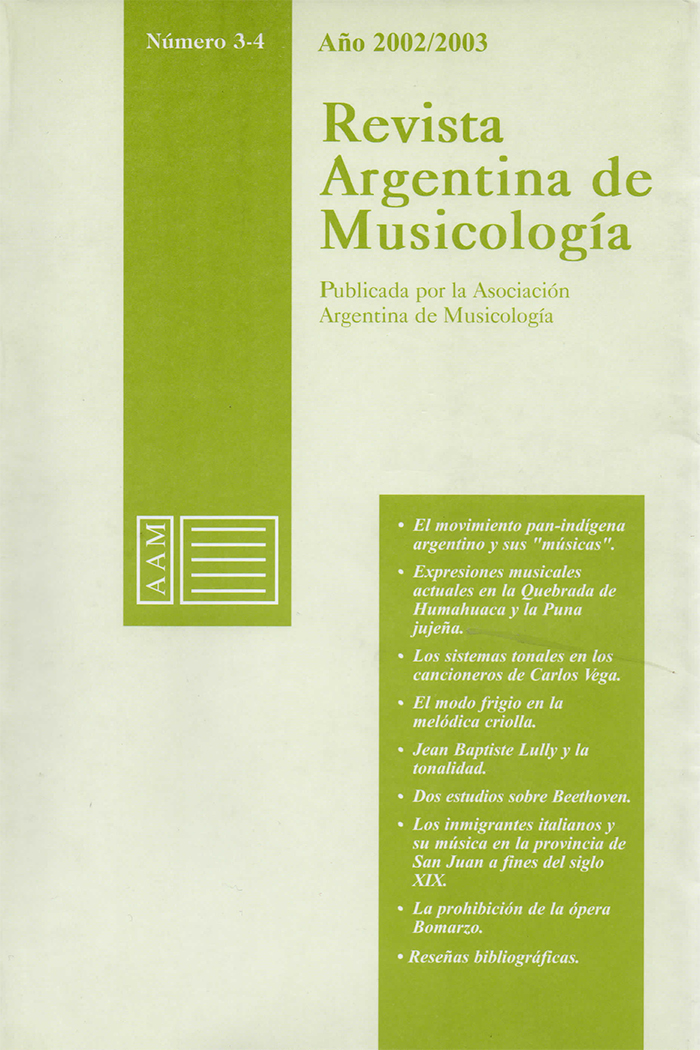
Two independent studies. The first one takes as its point of departure a narrative conception of the musical work (Ricoeur). By means of brief analyses of 4 Beethovenian works from different periods, it tries to sketch the change undergone by the composer in his manner of presenting and resolving conflict. Beginning in the "heroic" period (Patéthique Sonata, 5th. Symphony) with simple, static conflicts the resolution of which is forced by a will alien to the conflicting materials, he arrives in the 9th Symphony to a more dynamic formulation and an immanent resolution. In such late works as the op. 131 Quartet. however, he has renounced resolution. The second study deals with the 9th Symphony, especially from the viewpoint of its reception. Taking the idea of " feast" or "festival" (as defined by sociology and anthropology) as a point of reference, it examines the variety of heterogeneous and extravagant elements that make it so unsettling. It invites the reader to listen to its incoherence, to its juxtaposition of the sublime with the grotesque, in order to loose that excessive familiarity that threatens to obliterate its subversive potential and tum it into a trivial commodity.
Downloads
Downloads
Published
Issue
Section
License
Copyright (c) 2018 Asociación Argentina de Musicología

This work is licensed under a Creative Commons Attribution-NonCommercial 4.0 International License.
Attribution-NonCommercial 4.0 International
Licencia Creative Commons Atribución-NoComercial 4.0
You are free to:
- Share — copy and redistribute the material in any medium or format.
- Adapt — remix, transform, and build upon the material.
- The licensor cannot revoke these freedoms as long as you comply with the terms of the license
Under the following terms:
- Attribution — You must give appropriate credit, provide a link to the license, and indicate if changes were made. You may do so in any reasonable manner, but not in a way that suggests that you or your use are endorsed by the licensor.
- Noncommercial — You may not use the material for commercial purposes.
- No Additional Restrictions — You may not apply legal terms or technological measures that legally restrict others from making any use permitted by the license.
Notices:
You do not have to comply with the license for elements of the material that are in the public domain or when your use is permitted by an applicable exception or limitation.
No warranties are provided. The license may not grant you all the permissions you need for your intended use. For example, other rights—such as publicity, privacy, or moral rights—may limit how you use the material.